
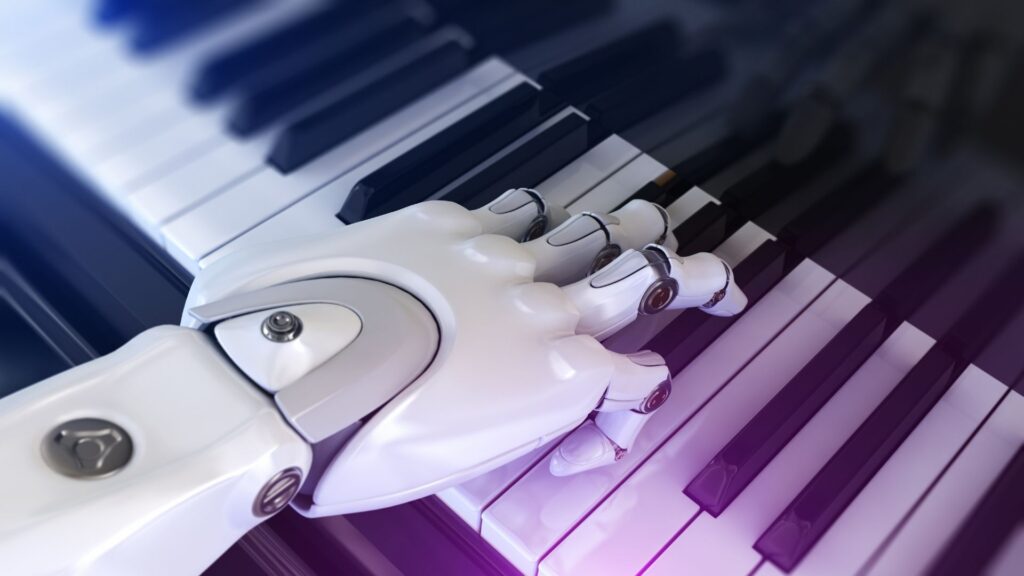
Artificial Intelligence is no longer science fiction in the music world—it is already here, actively reshaping how music is written, produced, mixed, and even released. What once required years of technical expertise and expensive studio time can now be assisted by intelligent software that learns, suggests, and even creates alongside human artists.
AI-based music production is quickly becoming one of the most powerful tools in the modern musician’s arsenal. And while some see it as a threat, many others recognize it for what it truly is: a revolutionary creative partner.
What Is AI-Based Music Production?
AI-based music production refers to the use of machine learning and intelligent algorithms to assist in various parts of the music-making process. These systems analyze huge amounts of musical data and use that knowledge to generate melodies, harmonies, beats, sounds, and even complete arrangements.
Today, AI tools can:
Rather than replacing musicians, AI acts as an assistant—handling repetitive tasks, offering inspiration, and speeding up workflows.
From Tools to Creative Partners
For decades, technology has helped musicians evolve. Drum machines replaced live drummers in some genres. Synthesizers changed how we design sound. DAWs replaced tape machines.
AI is simply the next stage of that evolution.
Instead of spending hours searching for the right chord or tweaking a mix, producers can now use AI to suggest options in seconds. Need a bassline that fits your melody? AI can generate one. Stuck on lyrics? AI can propose ideas. Want your rough mix polished? Intelligent mastering services can analyze and improve it automatically.
This doesn’t remove creativity—it amplifies it.
Democratizing Music Production
One of the most exciting aspects of AI in music is accessibility.
In the past, high-level music production required years of training and access to expensive studios. Today, a beginner with minimal technical knowledge can create professional-sounding tracks using AI-powered tools.
AI helps level the playing field by:
This democratization means more people than ever can express themselves through music, regardless of background or budget.
Faster Workflows, Greater Productivity
For professional producers, time is everything.
AI drastically reduces the amount of time spent on technical and repetitive tasks. Editing vocals, cleaning recordings, tuning performances, and organizing sessions can now be handled intelligently and automatically.
Producers can focus more on the artistic side—songwriting, emotion, and storytelling—while AI handles the heavy lifting behind the scenes.
In a fast-paced industry where deadlines are tight, this efficiency is invaluable.
New Forms of Creativity
Perhaps the most exciting impact of AI is how it inspires entirely new creative directions.
AI doesn’t think like a human. It can generate unexpected melodies, unusual harmonies, and combinations that a traditional musician might never consider. This opens doors to fresh genres, experimental sounds, and innovative production styles.
Many artists are already using AI as a brainstorming partner—feeding it ideas and seeing what comes back. Instead of replacing imagination, AI becomes a spark for it.
Will AI Replace Musicians?
This is the question everyone asks.
The short answer: No.
Music is more than patterns and data. It’s emotion, culture, experience, and human connection. AI can help create music, but it cannot replicate the personal story behind it.
What AI will replace are certain technical roles and manual processes—but not artistry.
The musicians and producers who thrive in the future will be those who learn to work with AI rather than fear it.
How AI Is Already Being Used
AI is already deeply integrated into modern music production in many ways:
These technologies are not futuristic—they are being used every day by creators at every level.
The Future Studio: Human + Machine
As AI continues to evolve, the role of the music producer will shift from technical operator to creative director.
Future studios will likely feature:
Instead of spending hours on small technical details, producers will be able to focus on vision, emotion, and originality.
What This Means for Musicians
For musicians and producers, the rise of AI brings both challenges and opportunities.
Those who ignore AI risk falling behind. Those who embrace it will gain powerful new creative advantages.
The key skills of the future will include:
In many ways, AI will push artists to become even more human—to focus on what machines cannot replicate: authenticity.
Embracing the Change
Every major technological shift in music has faced resistance—from electric guitars to autotune to digital audio workstations. AI will be no different.
But history shows that new tools don’t destroy music—they expand it.
AI-based music production is not about replacing musicians. It’s about empowering them to create faster, smarter, and in ways that were never possible before.
Final Thoughts
The future of music production will be a collaboration between human creativity and artificial intelligence. Musicians who learn to harness AI will be able to produce better music, reach wider audiences, and explore uncharted artistic territory.
The question isn’t whether AI will change music production.
The real question is: how will you use it to shape your sound?
Open 4Mat is a leading music mentorship offering hands-on training, expert mentorship, and studio access to help aspiring DJs and producers turn passion into professional skills.
All Right Reserved by Open4Mat © 2026. Web Design by Aun Digital